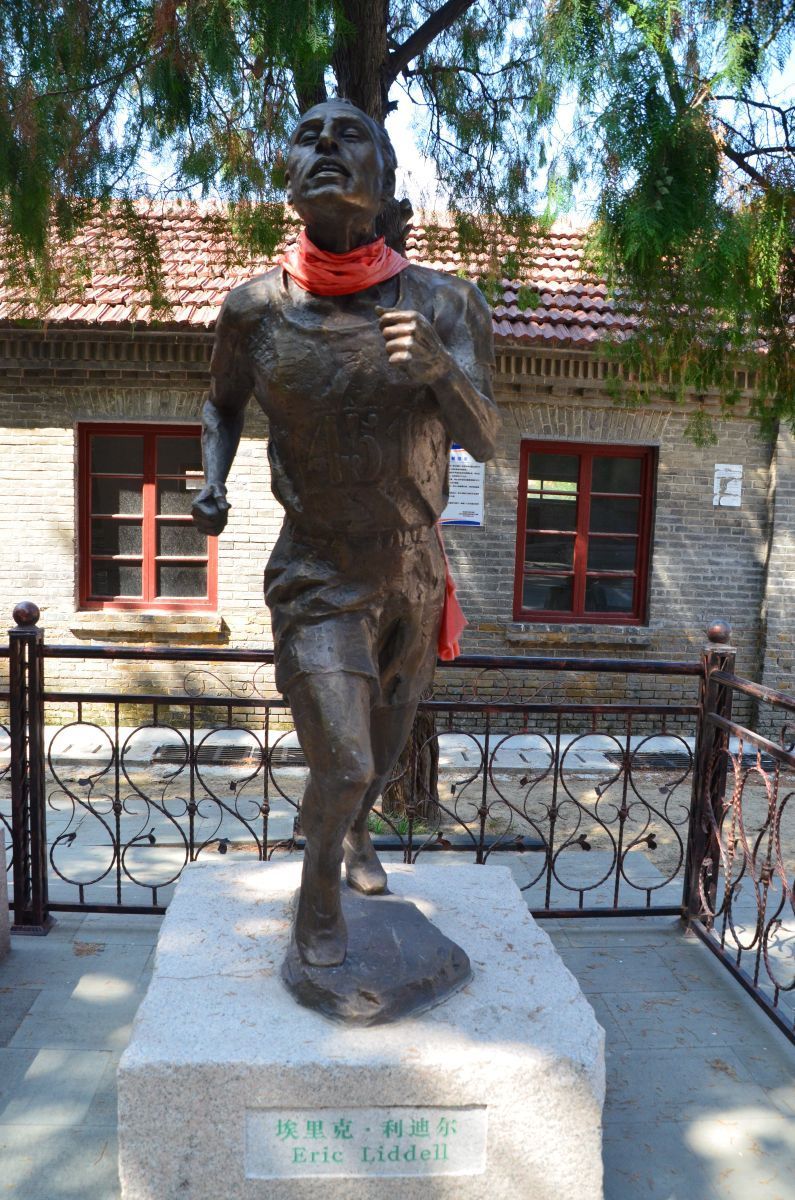
Before there was streaming, and before there was cable TV, there was ABC’s Wide World of Sports. If you wanted to watch athletes in lower profile events such as power lifting or skiing, you tuned into Wide World of Sports on Saturday afternoons. Each week the show began with the same tag line: “Spanning the globe to bring you the constant variety of sport... the thrill of victory... and the agony of defeat…” This year’s Winter Olympics have delivered plenty of thrills, and plenty of agony. When Norwegian skier Atle Lie McGrath threw away his ski poles and stomped off the course after missing a gate in the slalom final, I initially thought he was being a poor sport. Then the announcer informed me that McGrath’s grandfather had died on the opening day of the games. As the camera zoomed in on McGrath lying in a snowbank at the edge of the woods, my heart went out to him. My heart goes out to slalom gold medalist Mikaela Shiffrin in a different way. When she broke a 12-year drought in the Olympic slalom competition, Shiffrin stood motionless for a good long time. In 2020, Shiffrin’s father had died from injuries sustained in a fall. The skier told reporters that when she came across the finish line a winner, she felt at peace about her father’s absence for the first time, so she took a moment to be silent with him. These and other stories remind me of a fascinating Olympic story from a century ago that was brought to life in the 1981 film Chariots of Fire. The movie dramatizes the experiences of two British runners at the 1924 Paris games, Eric Liddell, a devout Scottish Christian, and Harold Abrahams, a Jewish Englishman. Abrahams must overcome prejudice to achieve his potential, while Liddell must allay his sister Jennie’s concerns that he is neglecting God’s call by pursuing a running career. (Liddell was born in China to missionary parents.) In a memorable scene , Liddell explains, “Jennie, you’ve got to understand. I believe that God made me for a purpose—for China—but he also made me fast! And when I run, I feel his pleasure. To give it up would be to hold him in contempt.” Liddell’s dream to win gold for Britain is seemingly thwarted when the 100-meter heats are scheduled for a Sunday. Despite pressure from the British Olympic Committee and the Prince of Wales himself, Liddell refuses to break the sabbath by competing. Another British competitor, having already medaled, gives up his place in the 400-meter race to Liddell. In the 400 final, held on a weekday, Liddell won gold, while Abrahams won gold in the 100. After the events memorialized in the movie, Liddell did return to China as a missionary. During World War II, he was interned in a Japanese concentration camp. In the camp, he won the respect of all the prisoners for his tireless efforts to serve them and ensure a just distribution of food and medicine. He died of malnutrition and a brain tumor five months before the camp was liberated. Liddell’s life witnesses to the Protestant belief that God can be glorified in secular life as much as in ordained or clerical ministries. Liddell also believed that the pursuit of a secular vocation should be governed by obedience to God’s commandments. Christian disagree about what should and should not be done on the sabbath, but then and now, people respect Liddell for not compromising his principles. As you watch the final events in this year’s Olympic games and witness new thrilling and agonizing tales spun on the ice and in the snow, remember Eric Liddell’s quote, and fill in the blanks for yourself: “I believe that God made me for a purpose, for _____, but he also made me _____! And when I _____, I feel his pleasure.” Complete those two sentences, and you’ll know without any doubt what your calling is. Image credit: By Alexandquan - Own work, CC BY-SA 4.0, https://commons.wikimedia.org/w/index.php?curid=91164821
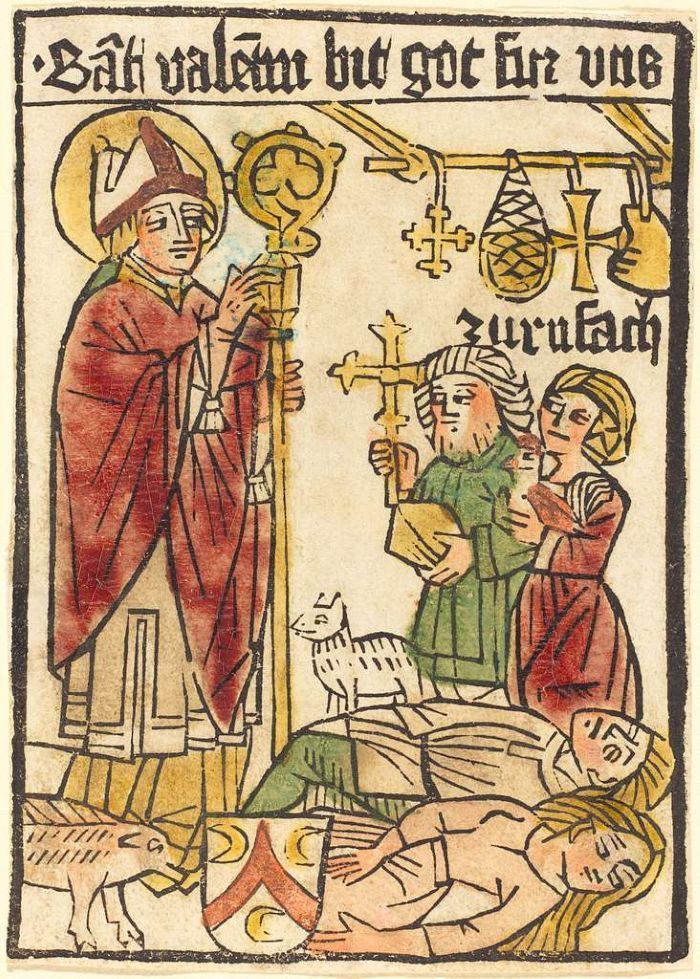
While driving the other day, I heard WIP’s Hugh Douglas issue a warning to any women listening to his show: if your man wants to take you out for Valentine’s Day on Friday or Sunday, you aren’t his main event this weekend! Douglas then chuckled to himself as if he’d exposed the true colors of half the men in Philly. Valentine’s Day is a fraught holiday. If you are single or widowed but don’t want to be, the cards, chocolates, and roses for sale can make you feel judged or envious. Inflation and price gouging can make even happy couples feel bad about themselves on February 14. Eating out in general is much more expensive than it was before the pandemic, and restaurants markup prices for entrées by 20% to 50% on Valentine’s Day. So, let’s change the subject! Before Valentine’s Day was dedicated to romantic love, it was a day to remember a Christian martyr. But who? More than one Valentinus was persecuted for their faith. The biography of one such St. Valentine describes him as a Christian priest who was placed under house arrest but won over his judge by restoring the eyesight of the judge’s daughter. The judge and his whole household were baptized. Later, he was arrested for evangelizing and appeared before Emperor Claudius Gothicus. When Valentine pressed Claudius to convert, the emperor sentenced Valentine to death. He was beaten and beheaded on February 14, 269. The date and the saint gradually got associated with romantic love in the late Middle Ages and early modern period, thanks in part to the poetry of Geoffrey Chaucer and John Donne. There are many such stories of martyrs who healed in the name of Christ and boldly witnessed to him, even when threatened with death. Today, persecution is not a problem that American Christians face. It’s indifference. But our engagement with the world should still mirror the general pattern of the saints who’ve gone before us. Our words and our deeds should point away from ourselves and toward the one who suffered and rose from the dead to heal a broken world. Some, like Valentine’s judge, may come to faith; others, like Emperor Claudius, may not. This Valentine’s Day, whether you are single, married, divorced, or widowed, ask yourself three questions: With whom does Jesus Christ want me to talk about my experience of him? What good deed can I do that will glorify God? Can I leave the results of my witness up to God? Grace and peace to you, Marvin Image credit: Public domain reproduction of illuminated manuscript page, Germany, 14th-15th century.

Religion has taken center stage in the debate over immigration enforcement. Earlier this week, a reporter asked Speaker of the House Mike Johnson to respond criticisms that Pope Leo XIV made of the Trump administration’s immigration policy. You can watch Pope Leo’s comments here , and Speaker Johnson’s reply here . The Pope urged the authorities to respect the religious freedoms of detainees and allow religious workers to visit them while in detention. Citing Matthew 25, the Pope noted that when we meet our Maker, we will have to answer the question, “How did you receive the foreigner?” He called for deep reflection on what’s happening in the United States, especially with respect to people who have lived in the country for years without causing problems. The Speaker countered that borders are biblical. Immigrants should be welcomed and loved, but the command to love one’s neighbor applies to individuals, not to the government. The role of the state is to maintain order and bring wrath on the wrongdoer, he said, citing Romans 13. He argued that we should uphold sovereign borders out of love for those inside the border, not hatred for those outside. I appreciate the Speaker’s attempt to think through a thorny public policy matter from a biblical and theological viewpoint. But the Pope has the better of the argument. ICE and CBP officers are not executing wrath on wrongdoers alone. They are harassing, detaining, and even killing U.S. citizens, non-citizens who are in the country legally, and people whose only wrong is being in the country without documentation, which is a civil, not a criminal offense. In fact, the Bible holds the civil authority as well as individuals to a high standard of neighborly love. One of many examples is when the prophet Jeremiah declared to the King, “Thus says the Lord: Act with justice and righteousness and deliver from the hand of the oppressor anyone who has been robbed. And do no wrong or violence to the alien, the orphan, and the widow, or shed innocent blood in this place.” Borders and boundaries are necessary to maintain the integrity of any entity, but sound borders are semi-permeable. Cellular membranes allow nutrients in, waste to go out, and cells to communicate with each other. Family boundaries are rather tight, but even families admit individuals from the outside. If we only married our closest kin, that would be disastrous! National borders exist to keep invading armies out while allowing trade, tourists, and immigrants to move between nations. In the book of Ruth, when a famine broke out in Bethlehem, an Israelite family crossed the border into Moab looking for food. When the famine ended, some of them returned along with a Moabite woman named Ruth. She became the great-grandmother of King David. If the border between Israel and Moab had been less porous, Israel’s history and ours might have turned out very differently. There are many details about immigration policy that can’t be read straight off the pages of Bible, such as how many refugees to admit every year, or how to reform the byzantine regulations governing the issuance of visas. But here is my list of first principles that I think all people of goodwill should ascribe to: State wrath should target only the wrathful and should be deployed sparingly. God calls the civil authority to a positive mission of protecting the vulnerable, and that includes the foreigner and their religious liberty and economic welfare. The immigrant is Jesus Christ in disguise. Immigrants should be welcomed as the spiritual and material blessings they are. Prudence should dictate the finer points of immigration policy, not fear or resentment. Yours in Christ, Marvin Photo credit: Rio Grande Bend near Boquillas Canyon (Big Bend National Park, TX), author Glysiak