
Making sense of leviticus

Running the longest relay race

the odyssey and Moral Injury

My mother has also been diagnosed with Alzheimer’s Disease. We received the news Friday evening via MyChart. I don’t think that’s the ideal way a physician should deliver bad news, but that’s neither here nor there. The diagnosis did confirm the mounting concerns we’ve had about our mom’s well-being. Mom is quite frail. In the last few months, I’ve noticed that it is harder for her to put her thoughts into words. She repeats the same stories, and she doesn’t sleep well at night. We have a lot of decisions to make. Should mom take one of the new Alzheimer’s medications? They do seem to slow the progress of the disease, but they can also have serious side effects. Does she need to move to assisted living. Would in-home care suffice for now? We’re leaning toward assisted living; mom is lobbying us to let her stay in her home. It’s difficult. Mom told my brother that without independence, there is no life, only existence. It’s an understandable reaction. My brother cautioned me to have compassion for what she’s feeling. He’s right. But her take on the situation is not accurate. Children aren’t independent, but they lead meaningful lives. We are legal guardians to our disabled son. His independence is more limited than other adults his age, but he lives a full life. True be told, none of us are truly independent. God created us to rely on each other and help each other. We depend on others for the food we eat, the medicine we take, and the love we share. As we age, our need for others grows. So do the gifts we have to share. Mom repeats stories, but many of them are worth hearing again, like the one about how she and my uncle would walk unaccompanied to the movie theater on Saturday afternoons where they lost themselves in other worlds. Mom doubts that we understand what she’s going through. I don’t understand, but at age 56, I can see it coming. I used to run, but my arthritic hip can’t take the pounding anymore. Now I walk, but I look wistfully at the runners who pass me in the park. I have one niece who is starting college this fall (at N.C. State, no less!) and another who is contemplating law school. My daughter and her companion have moved from the Windy City to Washington state, where there are whales to watch and opportunities to continue their education. The world is their oyster! For me, to say that the world is my oyster would be a bit of an overstatement. As you age, certain doors close. That’s the way it is. “The years of our life are threescore and ten, or even, by reason of strength, fourscore, yet their span is but toil and trouble; they are soon gone, and we fly away,” Moses prayed, in what sounds like a clear-eyed but melancholy moment. “All flesh is grass,” Isaiah prophesied. “The grass withers, the flower fades; but the word of our God will stand forever.” Everything changes. Nothing stays the same. We say that we have bodies, but we don’t say that we have minds. That’s because we equate the mind and its thoughts, feelings, and memories, with the Self. We are our minds. Jim Wright, a seminary classmate of mine and a gerontologist, has observed that what is terrifying about Alzheimer’s is that, in destroying our minds, Alzheimer’s makes us question if there is anything about us that is truly immortal. According to Wright, when Paul wrote to the Corinthians about the resurrection, he didn’t say that our resurrected bodies would be enlivened by a soul, or what is called a psyche, in the Greek language. Rather, our resurrected life will be animated by the pneuma, or spirit, of God. Nothing about us is indestructible, Wright argues, neither our bodies, nor our minds, nor even the souls that enliven us fading flowers. Only when we make peace with that can we care for people who are losing their memories with the love and dignity they deserve. But God is eternal. God remembers everything we forget, and God forgets what we would like to forget and often cannot: our sins ( Jeremiah 31:34 ). We trust that God will speak a new, creative Word over us, a word filled with God’s life-giving Spirit. When we hear that Word, we will rise again. Image Credit: Amyloid beta immunostaining showing amyloid plaques in brown. Amyloid plaques in the brain are associated with Alzheimer's Disease. Image By Nephron - Own work, CC BY-SA 3.0, https://commons.wikimedia.org/w/index.php?curid=12274694
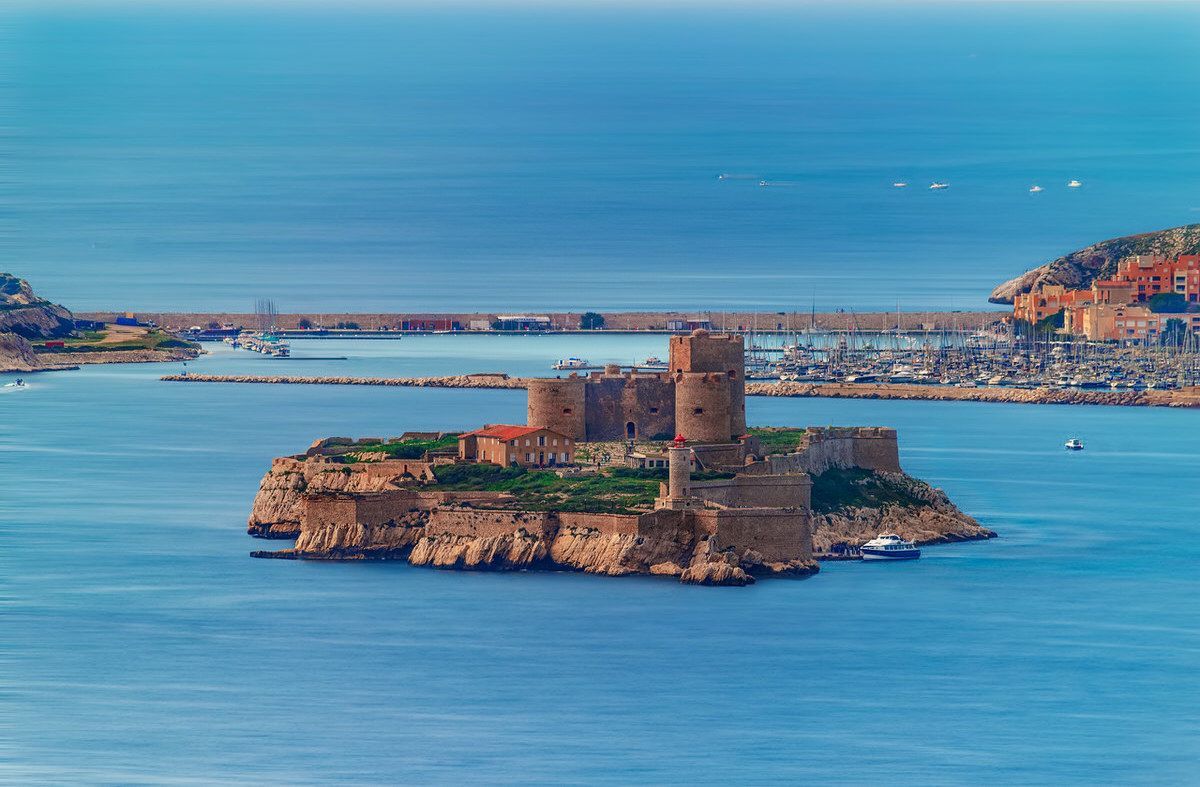
Revenge is a recurring theme in my summer reading. I’m in the middle of Alexandre Dumas’s classic, The Count of Monte Cristo . Dantès, the Count, is framed for a crime he didn’t commit. In prison, he learns of a vast fortune hidden on a deserted island. Dantès escapes and collects the treasure. At this point in the novel, he is spinning a web of vengeance with his fortune to ensnare the men who wronged him. Earlier, I read three novels by the horror writer Stephen Graham Jones. I Was a Teenage Slasher is the “memoir” of Tolly, a high school outcast who, infected by some mysterious agent, is driven to murder the six cool kids who tormented him at a summer party. Jones’s The Only Good Indians is the tale of four members of the Blackfeet tribe who go on an illegal and unsporting elk hunt. A decade later, a shapeshifting elk-spirit stalks, toys with, and eliminates each of them. In The Buffalo Hunter Hunter (not a typo), a 100-year-old diary of a Lutheran pastor in Miles City, Montana is discovered and handed over to his only surviving descendant. In it, she reads of her ancestor’s Sunday afternoon conversations with Good Stab, a Blackfeet Indian and vampire. Good Stab drinks the blood of soldiers and settlers in revenge for their massacring his people and the buffalo. These novels pose many fascinating questions. I haven’t been wronged as badly as Dants or Good Stab, but if I were, and I could get back at my enemy, would I? What if animals and natural forces were moral agents? What if animals, like the elk herd in The Only Good Indians, or their human advocates, like the vampire hunter of buffalo hunters, sought frontier justice for humanity’s abuse of creation? “Revenge is sweet,” goes the old saying, but is it? Fantasies about payback may be more enjoyable than the thing itself. I will have to keep reading to find out if Dantès gets his revenge, and if so, whether it satisfies him. In Tolly’s case, revenge was not so sweet. It cost him his best friend and his future. The Apostle Paul wrote, “Beloved, never avenge yourselves, but leave room for the wrath of God.” He recommended that Christians literally kill their enemies with kindness. By doing good for those who do them wrong, “You will heap burning coals on their heads.” (Rom. 12:19-20). It’s not that there is no place for retribution in God’s moral universe. “There will be anguish and distress for everyone who does evil” (Rom. 2:9), but we overstep if we appoint ourselves to a task that belongs solely to God. In the meantime, what do we do with our righteous indignation about the harm done to us and to others? We can love indiscriminately, and we take also “take it to the Lord in prayer.” The Book of Psalms, the Bible’s prayer book, is surprisingly full of prayers calling on God to come in wrath against God’s enemies. Sometimes the psalmist prays for poetic justice. “Let the net that they hid ensnare them; let them fall in it—to their ruin” (Ps. 35:8). At other times, the psalmist wants to see horror movie levels of violence. “O God, break the teeth in their mouths! Break the arm of the wicked and evildoers” (Ps. 58:6 and 10:15). One embittered Israelite even fantasized about God pursuing a blood feud against the empire that lay siege to Jerusalem, starved its residents, and drove them from their homes. “O daughter Babylon, you devastator! Happy shall they be who take your little ones and dash them against the rock!” (Ps. 137:9) This doesn’t sound very… Christian, does it? And yet the word “nice” is not in the Bible, as another book I’m reading pointed out! These not nice verses teach us that we don’t have to fake it with God. God can handle our outrage. God is also the only one who can set right the world. Judges, juries, laws, politicians, policies, and mediators do their best, but they sometimes fail us. Spoken from a pure heart, a prayer for vengeance is really a prayer that God’s kingdom would come. It is a plea that all accounts would be settled, tears dried, and wrongs righted. Photo credit: The Chateau d’If, where Edmund Dantès was imprisoned in The Count of Monte Cristo. Photo by Marian78ro - Own work, CC BY-SA 4.0, https://commons.wikimedia.org/w/index.php?curid=90025074
The Wisdom of a Presbyterian pastor patriot

“Leisure is serious business,” writes Harvard professor Arthur C. Brooks . Agree or disagree? You may recoil from this statement. With graduations around the corner and temperatures soaring into the 90s, perhaps you can’t wait to get to the Shore and get away from the serious business of making a living and from seriousness in general. Nature abhors a vacuum. If we set out to do nothing, we’ll soon fill that void with pointless and unfulfilling busy-ness: scrolling social media, ruminating, booze. If you aren’t careful, even an expensive vacation can be frittered away! Don’t think of leisure time as time off from work, Brooks writes, but time when we occupy ourselves with a different kind of work—the work that reaps non-monetary rewards. Leisure time is for planning and executing activities that feed our souls. To do this, structure and goal setting must be as much a part of our leisure time as it is our time in the office. Brooks, a cradle Evangelical turned devout Roman Catholic, seconds the advice of Bishop Fulton Sheen , who recommended his listeners set aside a “Holy Hour” each day for reading scripture, prayer, and meditation. Evangelicals call this “quiet time.” This is a great thing for us mainline Presbyterians to build into our schedules. Commit to it as you would an important standing meeting at your workplace. The goal of making this commitment is “a closer walk with God” and bearing more spiritual fruit. In the Reformed tradition, we call this “sanctification,” or growing in holiness. If an hour is too much time, start small. Try 10 minutes. It is also good to set wellness and artistic goals for ourselves and our leisure time. A good goal is something that is attainable but also stretches you. That could be setting a goal to take 10,000 steps per day, or to train for your first ever 5k or 10k race. If you want to grow in artistic talent and appreciation, what if you committed to water-coloring for 15 minutes per day and going to a local art museum once a month? Then reward yourself with a yearly weekend getaway to another city to visit several museums there. We have high hopes for our vacations, but we often find that the rest and renewal we experience on vacation is short-lived. That’s the way it is with planned inactivity, Brooks maintains. It’s the junk food of time. It’s less restful than we think. But if we treat our daily and weekly time away from the office with thoughtfulness and intentionality, and bring the habits we develop there to our vacations, then we may find our wellbeing boosted and our joy restored.
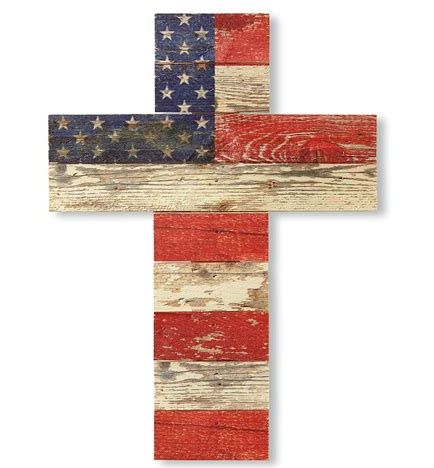
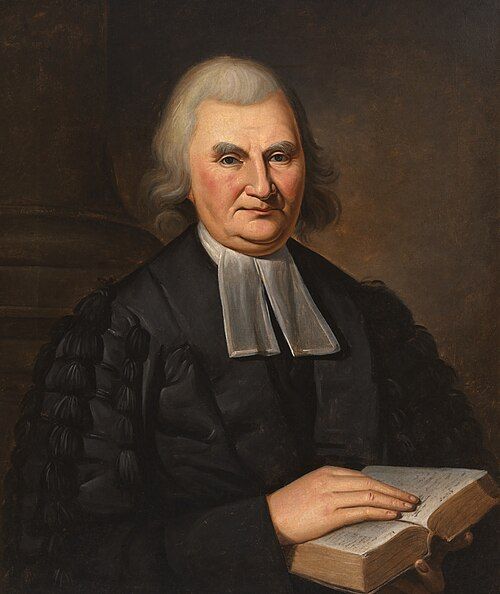
Most Americans are Christians, but is America a Christian nation? Should it be? Christian Nationalism is a political movement that answers “Yes” to both those questions. Last weekend’s Rededicate 250 gathering in Washington DC is a good example of Christian Nationalism in action. Rededicate 250 brought thousands of people to the National Mall to sing, pray, and hear pastors and political leaders laud the nation’s Christian heritage. The gathering fell on the 250 th anniversary of a national “ Day of Humiliation, Fasting, and Prayer ” proclaimed by the Second Continental Congress at the outset of the American Revolution. Christian Nationalism has critics, many of whom are Christians. The Baptist Joint Committee on Religious Liberty, for example, argues that Christian Nationalism “distorts both the Christian faith and America’s constitutional democracy” by merging Christian and American identities. Why is Christian Nationalism a distortion of the Christian faith? To answer that question, let’s compare the 1776 proclamation, written by William Livingston, a Presbyterian delegate from New Jersey to the Continental Congress, to the invocation prayed by Speaker of the House Mike Johnson at the Rededicate 250 event. In view of the “insidious and vindictive” British administration, the Proclamation called all residents of the 13 colonies to acknowledge God’s providence over the current crisis, to confess their sins, and pray that the present danger might be averted. The proclamation urged Americans to fast and to forgo work on May 17 (a Friday that year) to gather in worship with Christians of all denominations. It further implored God to frustrate the plans of the British and turn them to “justice and benevolence.” But if that were not God’s will, the proclamation asked that God would grant the colonists victory on the battlefield, bless their leaders, and quickly restore America to peace, health, and plenty. Speaker Johnson’s invocation also interceded for our nation’s leaders, as well as soldiers, health care professionals, parents, and pastors. He also acknowledged, in far more muted tones than the 1776 proclamation, our collective shortcomings. “Father, we pray for mercy upon our land, mercy upon us for our mistakes.” But the Speaker’s prayer was really quite different than William Livingston’s resolution. Johnson did not call on the attendees to humble themselves. He claimed that the Rededicate 250 crowd was already humble because they viewed the nation’s victories as divine miracles. Johnson noted the rise of sinister voices that “insist that… the American story is one of hypocrisy and failure, and this story can only be understood through the lens of our sins. But Father, we reject that. We rebuke that.” The Continental Congress did not reject those sentiments at all! Its resolution spoke frankly about sin, not just the sins of an arrogant King across the Atlantic, but sin on this side of the Atlantic, which God was punishing by wielding an arrogant King against them. Speaker Johnson did not pray for his ideological enemies. He mentioned them only to condemn their viewpoints. While Livingston’s resolution strongly denounced British oppression, it called the British “our unnatural enemies.” War between Britain and America was not normal! It was fratricide. “We are inoculating the world with a mild form of Christianity, so that it is now practically immune against the real thing,” wrote E. Stanley Jones, missionary and theologian. That’s what Christian Nationalism does. Christian Nationalism uses Christian language, scripture and symbols to form self-congratulatory people. It asks nothing more of people than to look at the past through rose-colored glasses and feel confirmed in their low opinions of their present day opponents. It certainly doesn’t ask people to fast! Christian faith, on the other hand, calls people to turn their lives around and turn to God for help to be peaceful, virtuous, and courageous citizens who hope for reconciliation, even in the most bitter conflicts. And that call to transformation begins with Christians.

Why not rejoice when others rejoice?

What Christians owe their governments